
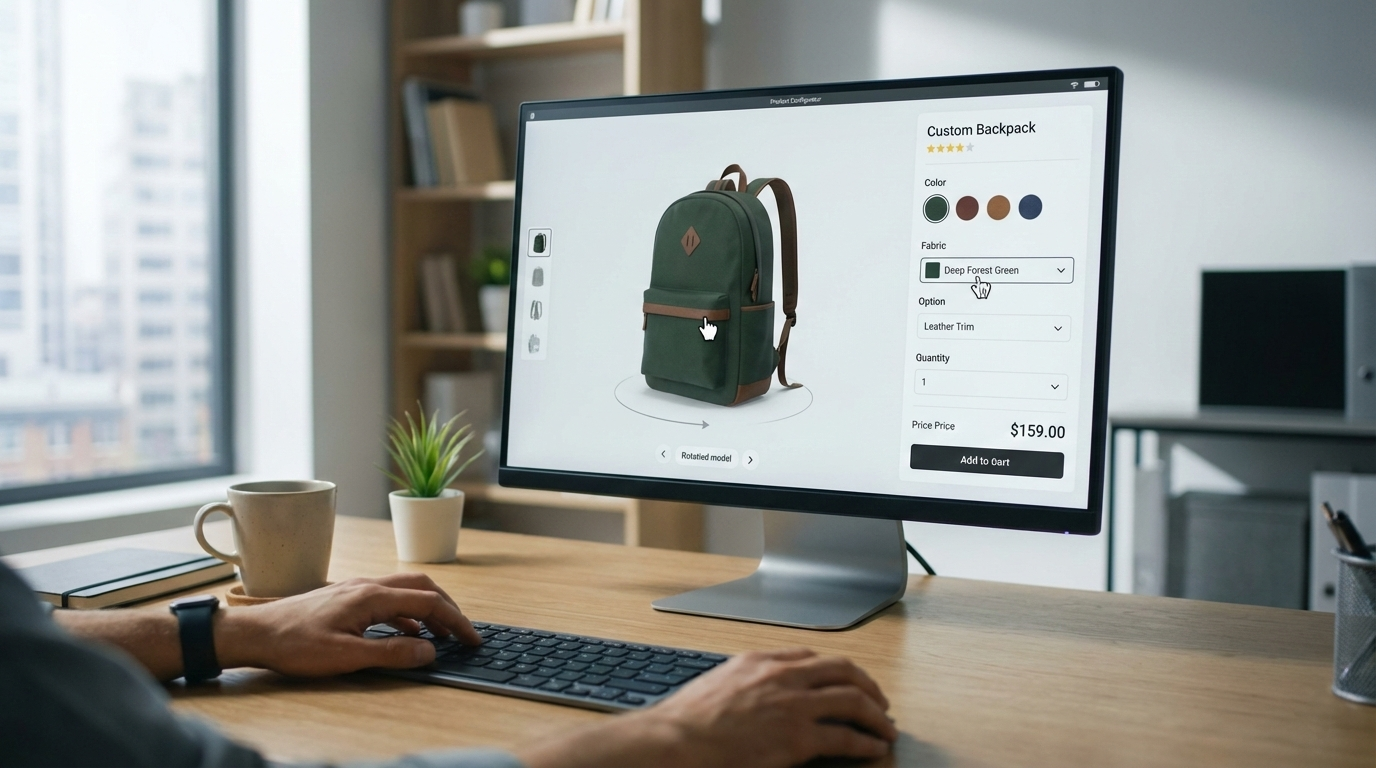
The digital commerce landscape is experiencing a fundamental shift in how businesses present products and how customers make purchasing decisions. At the center of this transformation sits the product configurator, a technology that's rapidly evolving from a nice-to-have feature to an essential component of competitive online retail. As consumer expectations rise and personalization becomes the standard rather than the exception, product configurators are emerging as critical tools that separate thriving businesses from struggling ones.
Understanding the Product Configurator Revolution
A product configurator is an interactive digital platform that allows customers to customize products according to their preferences, instantly visualizing changes and understanding pricing implications in real-time. Unlike traditional e-commerce, where customers select from predetermined options, a configurator empowers buyers to become co-creators, actively designing products that meet their exact specifications.
This configurator technology represents more than just a technical innovation. It's a philosophical shift in commerce. The configurator acknowledges that modern consumers don't want to settle for mass-produced, one-size-fits-all solutions. They demand products tailored to their unique needs, tastes, and circumstances. The product configurator delivers this personalization at scale, making custom manufacturing economically viable for businesses while providing customers with the individualized products they crave.
Why Product Configurators Matter More Than Ever
The Personalization Imperative
Today's consumers have been conditioned by experiences across digital platforms to expect personalization. Streaming services recommend content based on viewing history. Social media curates feeds algorithmically. E-commerce sites suggest products based on browsing behavior. This pervasive personalization has created expectations that extend to product selection itself.
A product configurator meets this expectation head-on. Rather than offering limited, predetermined variants, the configurator lets customers specify exactly what they want. This configurator-driven personalization isn't just appreciated. It's increasingly demanded. Research indicates that over 70% of consumers express frustration when shopping experiences aren't personalized, and nearly half will abandon brands that don't offer customization options.
Bridging the Online-Offline Gap
One of e-commerce's persistent challenges is replicating the tactile, engaging experience of physical shopping. In brick-and-mortar stores, customers can touch products, examine them from every angle, and understand exactly what they're buying. Online shopping has traditionally lacked this tangibility.
Product configurators bridge this gap through visualization technology. When customers use a configurator to select materials, colors, dimensions, and features while seeing photorealistic renders or 3D models update in real-time, the experience approaches the confidence level of physical shopping. The configurator doesn't just show products. It lets customers interact with them meaningfully, reducing the uncertainty that causes cart abandonment.
Competitive Differentiation in Crowded Markets
Market saturation is a challenge across virtually every product category. Customers can find dozens of similar options with minimal price differentiation. In this environment, businesses need distinctive value propositions, and a sophisticated product configurator provides exactly that.
When competitors offer static product catalogs while you provide an interactive configurator, you're not just offering better technology, you're delivering a superior customer experience. The configurator becomes a reason to choose your business over alternatives. This differentiation is particularly valuable because configurator technology creates switching costs; once customers invest time designing their perfect product in your configurator, they're psychologically committed to your brand.
Data-Driven Business Intelligence
Every interaction with a product configurator generates valuable data. Which features do customers select most frequently? What price points trigger abandonment? Which customization combinations are most popular? How do customer preferences vary by demographic or geography?
This configurator data provides unprecedented insight into customer desires, enabling businesses to optimize inventory, inform product development, refine marketing strategies, and make strategic decisions based on actual behavior rather than assumptions. The product configurator becomes both a sales tool and a market research platform.
Reducing Returns and Increasing Satisfaction
Product returns are expensive, costing businesses billions annually while frustrating customers and harming environmental sustainability. A primary driver of returns is mismatched expectations: what arrives doesn't match what customers thought they were ordering.
Product configurators dramatically reduce this expectation gap. When customers use a configurator to specify exactly what they want and see accurate visualizations of their choices, they know precisely what's coming. This configurator-driven transparency results in return rates 30-50% lower than traditional e-commerce, benefiting both businesses and customers.
Industries Transformed by Product Configurators
Furniture and Home Furnishings
The furniture industry has been revolutionized by product configurators. Customers now configure sofas by selecting dimensions, fabrics, cushion firmness, leg styles, and accessories. The configurator renders their custom piece from multiple angles, eliminating the guesswork that previously made furniture buying stressful. Major furniture retailers report that products with configurator options sell at rates 40-60% higher than similar products without configurators.
Automotive Sector
Car manufacturers pioneered sophisticated vehicle configurators that let buyers select models, engines, transmissions, colors, wheels, interior materials, technology packages, and accessories. These automotive configurators have become so integral that most car purchases now begin with online configuration sessions. The configurator serves as both a design tool and a qualification mechanism, helping dealerships identify serious buyers.
Fashion and Footwear
Fashion brands use product configurators to offer customized shoes, jewelry, clothing, and accessories. Customers design unique pieces by selecting colors, materials, patterns, sizes, and personalization elements like monograms. These configurators tap into customers' desire for self-expression while commanding premium prices—configured fashion items typically sell for 20-40% more than standard products.
Technology and Electronics
Computer manufacturers leverage configurators to let customers build systems matching their specific needs. Users select processors, RAM, storage, graphics cards, displays, and peripherals while the configurator updates pricing and ensures component compatibility. This configurator approach transforms technical purchasing from confusing to straightforward, increasing customer confidence and reducing support requests.
Manufacturing and B2B Commerce
Industrial and business-to-business sectors increasingly adopt product configurators for complex equipment, machinery, and systems. These configurators guide buyers through technical specifications, ensuring they order exactly what their operations require. The configurator reduces sales cycle length by enabling customers to self-educate and configure independently before engaging sales teams.
Key Capabilities of Modern Product Configurators
Real-Time Visual Rendering
Contemporary product configurators deliver instant visual feedback. Whether using high-quality images, 3D models, or augmented reality, the configurator updates immediately as customers make selections. This real-time rendering is non-negotiable; delays or low-quality visuals undermine the configurator's effectiveness and customer trust.
Dynamic Pricing Intelligence
As customers interact with a product configurator, pricing should update automatically and transparently. The configurator displays how each choice affects total cost, helping customers optimize their configuration to balance desires against budget. This configurator transparency prevents sticker shock at checkout and builds trust throughout the shopping journey.
Intelligent Logic and Rules
Sophisticated product configurators incorporate business logic, ensuring configurations are valid. The configurator prevents incompatible combinations, suggests complementary options, and guides customers toward optimal selections. This intelligence transforms the configurator from a passive tool into an active advisor.
Mobile-First Design
With mobile commerce representing over 60% of online shopping, product configurators must work flawlessly on smartphones and tablets. Touch-optimized controls, responsive layouts, and performance optimization ensure the configurator experience is excellent regardless of device.
Integration with Commerce Platforms
A product configurator shouldn't exist in isolation. It must integrate seamlessly with e-commerce platforms, inventory management systems, customer relationship management tools, and fulfillment operations. This configurator integration ensures that custom configurations flow smoothly through the entire order-to-delivery process.
Save, Share, and Collaborate
Modern product configurators allow customers to save configurations, share them with others for feedback, and return later to complete purchases. This configurator functionality respects the reality that significant purchases involve multiple stakeholders and extended consideration periods.
The Business Case for Product Configurator Investment
Revenue Impact
Businesses implementing product configurators consistently report impressive financial results. Conversion rates for products with configurators average 25-45% higher than similar products without configurators. Average order values increase 15-35% as customers add features and upgrades through the configurator interface. These revenue improvements typically deliver ROI within 6-12 months of configurator implementation.
Operational Efficiency
While product configurators require upfront investment, they generate operational savings. Customer service inquiries decrease as configurators answer questions visually. Sales cycles shorten as customers self-educate through configurator interactions. Return rates drop significantly when configurators set accurate expectations. These efficiency gains compound over time, making configurators increasingly valuable.
Market Expansion
Product configurators enable businesses to offer vastly expanded product ranges without corresponding inventory increases. Instead of stocking every possible variant, companies maintain components and assemble custom configurations on-demand. This configurator-enabled approach opens new markets and customer segments previously unreachable due to inventory constraints.
Brand Perception
Implementing a sophisticated product configurator positions brands as innovative, customer-focused, and technologically advanced. The configurator becomes a tangible demonstration of commitment to customer experience, enhancing brand perception and justifying premium pricing.
Implementing Product Configurators Successfully
Start Strategic, Not Comprehensive
Resist the temptation to make everything configurable immediately. Begin your configurator journey with products that have clear customization demand, sufficient margin to justify the investment, and manageable complexity. Perfect the configurator experience on these products before expanding.
Prioritize User Experience
A product configurator's technical sophistication matters little if customers find it confusing or frustrating. Invest heavily in user experience design, intuitive navigation, clear labeling, helpful guidance, and visual clarity. Test your configurator extensively with real users before launch.
Ensure Performance Excellence
Slow-loading configurators kill conversions. Optimize images, leverage content delivery networks, minimize server round-trips, and ensure your configurator performs excellently even on slower connections. Performance isn't optional—it's fundamental to configurator success.
Provide Guidance and Support
Not all customers are comfortable with technology. Include tooltips, help documentation, tutorial videos, or live chat support within your product configurator. These support elements prevent abandonment and ensure the configurator serves all customer segments.
Measure and Iterate
Implement comprehensive analytics for your product configurator. Track usage rates, completion rates, popular options, abandonment points, and conversion metrics. Use this configurator data to continuously refine and improve the experience.
The Future of Product Configurators
Product configurator technology continues evolving rapidly. Emerging trends include:
Artificial Intelligence Integration: AI-powered configurators will analyze customer preferences and automatically suggest optimal configurations, making personalization even more accessible.
Enhanced Augmented Reality: Next-generation configurators will offer increasingly realistic AR experiences, letting customers visualize configured products in their actual environments with stunning accuracy.
Voice-Activated Configuration: Voice interfaces will enable hands-free configurator interaction, making customization accessible while multitasking or for users with accessibility needs.
Blockchain Authentication: Configurators may integrate with blockchain systems to provide transparent sourcing information, authenticity verification, and ownership records for configured products.
Sustainability Visualization: Environmentally conscious consumers will use configurators to see the environmental impact of material choices, helping them make more sustainable purchasing decisions.
Overcoming Configurator Implementation Challenges
Technical Complexity
Building a product configurator requires significant technical expertise, 3D modeling, real-time rendering, complex logic rules, and system integration. Partner with experienced configurator platform providers or development teams rather than attempting to build internally unless you have substantial technical resources.
Content Creation
High-quality product configurators demand extensive visual assets, such as 3D models, texture maps, and product photography for every variant. Budget appropriately for professional content creation; poor visuals undermine configurator effectiveness.
Change Management
Implementing a product configurator affects multiple business functions—sales, manufacturing, fulfillment, and customer service. Ensure cross-functional buy-in, provide adequate training, and manage the organizational change thoughtfully.
Ongoing Maintenance
Product configurators require continuous updates as you introduce new products, materials, or options. Plan for ongoing maintenance resources rather than treating the configurator as a one-time project.
Conclusion: The Configurator Imperative
The growing importance of product configurators in modern commerce isn't speculative. It's an empirical reality confirmed by data from thousands of businesses across industries. As customer expectations evolve and personalization becomes table stakes, configurators transition from a competitive advantage to a competitive necessity.
Businesses embracing product configurator technology are capturing market share, commanding premium pricing, building stronger customer relationships, and generating valuable data insights. Those hesitating are watching customers migrate to competitors offering superior configurator-driven experiences.
The product configurator represents the future of commerce, a future where mass customization is economically viable, where customers actively participate in product design, where visualization eliminates purchase uncertainty, and where businesses understand customer preferences with unprecedented clarity.
The question facing businesses today isn't whether product configurators matter. The evidence conclusively demonstrates they do. The question is how quickly you'll implement configurator technology and start realizing the benefits that leading companies already enjoy.
In modern commerce, the product configurator isn't just growing in importance. It's becoming indispensable. Your customers expect it. Your competitors are implementing it. The market is rewarding it. The time to embrace configurator technology is now.